
Cataract
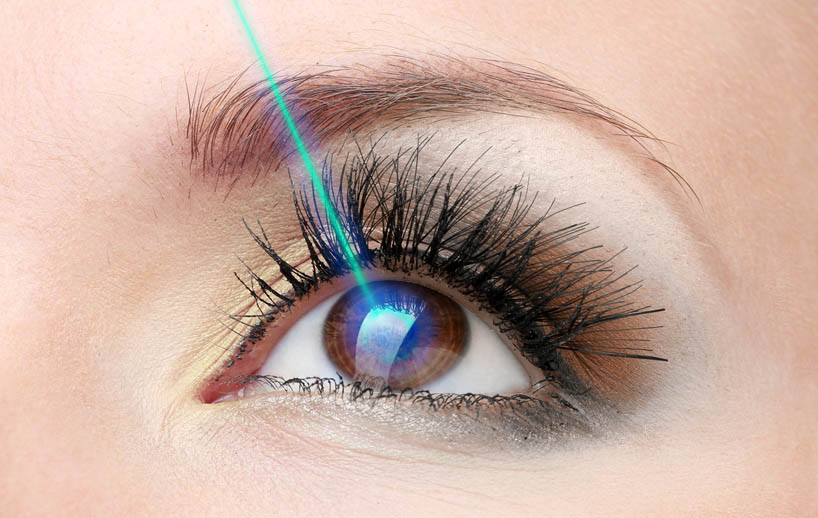
Bespoke assessment by me (no “technicians”), bespoke surgery by me
Cataract surgery is a commonly performed microsurgical procedure to improve your sight, once your own optician (optometrist) can no longer help with a glasses change. During the 15 minute procedure, the cloudy lens is removed from your eye using an ultrasound probe via self-sealing stitch-less micro incisions, followed by the insertion of a foldable intraocular lens implant (IOL): this is called phacoemulsification. Although routine, it is a delicate and precise operation. Your optician or GP will refer you to me privately, by name. At your first consultation, I will assess your eye condition including taking state-of-the-art optical laser biometry measurements. I will discuss the operative, intraocular lens implant and optical options with you in detail, including the small risks of surgery. Sometimes surgery is not recommended or other eye conditions are detected. If cataract surgery is recommended, a date for the day case surgery can usually be arranged within 3-6 weeks; sometimes much sooner, to suit you. If you wear contact lenses, you will need repeat measurements after a period of no-contact-lens-wear for about 3 weeks. You will receive a detailed information booklet about your proposed cataract surgery. I see you again immediately before surgery; then in theatre where I usually say goodbye as your final follow up will be done by your own optician when they test your eye/s for glasses at the 6 week stage. Thereafter you will attend as usual for annual review by your own optician. If the second eye is to be operated on, we can now do this at the same time as the first in some cases (this is called ISBCS: Immediate Sequential Bilateral Cataract Surgery), or this can usually be done within a week or two of the first, or after the first has settled – we can discuss which is best for you. You will have continuity of care: confidence of having your condition managed by me throughout – I perform your initial consultation (no technicians or others are involved, as the quality of medical care is always inferior in those types of fragmented assessments), then I perform your surgery at a later date, and I will give you my own leaflets and instructions on your post-op care, and you have easy access to me if you have any issues to help with.
My video on this is on the HomePage.
Surgery
This is performed in Albyn’s excellent purpose-built Theatre 3 with a brand new Phacoemulsification machine and ceiling-mounted Zeiss microsurgical microscope. A variety of different intraocular lenses are stocked, and “premium” multifocal and toric lenses can also be used, although these are not suitable for most people. I use topical anaesthetic for local anaesthetic (LA) (meaning eye-drop anaesthesia only and no injections). Sometimes a patient may prefer a General Anaesthetic (GA) or this may be recommended for the safety of your eye surgery: in either case, my Consultant Anaesthetist is always present during your surgery: and will meet you on the ward prior to theatre. Your surgery is performed while you lie on a theatre table for 15 minutes; you will find theatre welcoming, friendly and not too overwhelming. The surgery is painless. I can give you a running commentary if you wish! Afterwards you return to your private room on the ward for refreshments; and once you have your detailed and printed post-operative instructions, you may go home with your eyedrops and eye shield. If you have a General Anaesthetic – and many who come to the Albyn prefer this – you will usually be in hospital a few hours longer; and although you may still return home, you must have someone to stay with you overnight, and must avoid driving the next day.
Results
The outcome of cataract surgery, assuming careful assessment and delicate uncomplicated surgery, are usually excellent with restoration of visual function. Whilst I usually aim to leave you with excellent clear unaided distance vision (which most patients opt for), a pair of glasses for winter or night driving is often required: your own optician will advise when they see you a few weeks after surgery. I perform continuous audit of my cataract outcomes. My surgical results are excellent, and far exceed the Royal College of Ophthalmologist’s benchmark gold standards. I have a personal complication rate much lower than the national UK average. I perform regular adult cataract surgery in my NHS post. In cases of congenital and developmental cataract, I also perform surgery on babies and children at the Royal Aberdeen Children’s Hospital.
Laser Capsulotomy – see my video on this on HomePage
I offer YAG laser treatment for posterior capsular opacification after cataract surgery. Opticians are excellent at detecting this, and would refer you back to me for laser if necessary. This is a fairly common occurrence that may present months or years after your cataract surgery and lens implantation. It is not a complication, but a consequence of cataract surgery. YAG Laser Capsulotomy is a quick procedure, performed as an out-patient, which rapidly and completely restores the vision to its immediate-post-operative state. It can almost always be done at the same time as your consultation. Unlike cataract surgery, there are no drops and no restrictions afterwards.
Costs
Please see FAQ: How much does surgery cost?
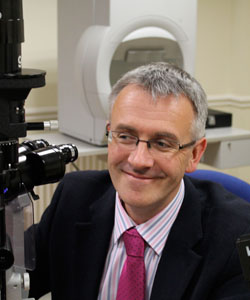
Mr. Christopher Scott
MB ChB FRCOphth
Consultant Ophthalmologist
BMI Albyn Hospital
21-24 Albyn Place
ABERDEEN
AB10 1RW
Appointments:
Call 01224 595993
or book online